
Commercial low-slope roofing only · Family-owned in Indiana, PA · SBA HubZone certified
Mon–Fri 7:00am–5:00pm · 412-888-0283
You paid for a 15- or 20-year warranty on your commercial roof. Here is the uncomfortable question: if you filed a claim tomorrow, could you produce the inspection records the manufacturer will ask for?
Most building owners assume a roof warranty is like a car warranty — something that sits in a drawer and works when you need it.
It is not. It is a contract with conditions, and the conditions are ongoing.
The thing that most often voids a commercial roof warranty is not a failed membrane, a bad seam, or a storm. It is a missing record. Manufacturers require documented, professional inspections at defined intervals for the entire life of the warranty. When a claim comes in, that documentation is what they ask for first.
No records, no coverage — even when the roof itself is sound.
ClimaShield Commercial Roofing installs manufacturer-warranted systems on commercial low-slope buildings across Western Pennsylvania, and we administer the compliance side for the buildings we maintain. This page explains what the requirements actually are, so you can check your own.
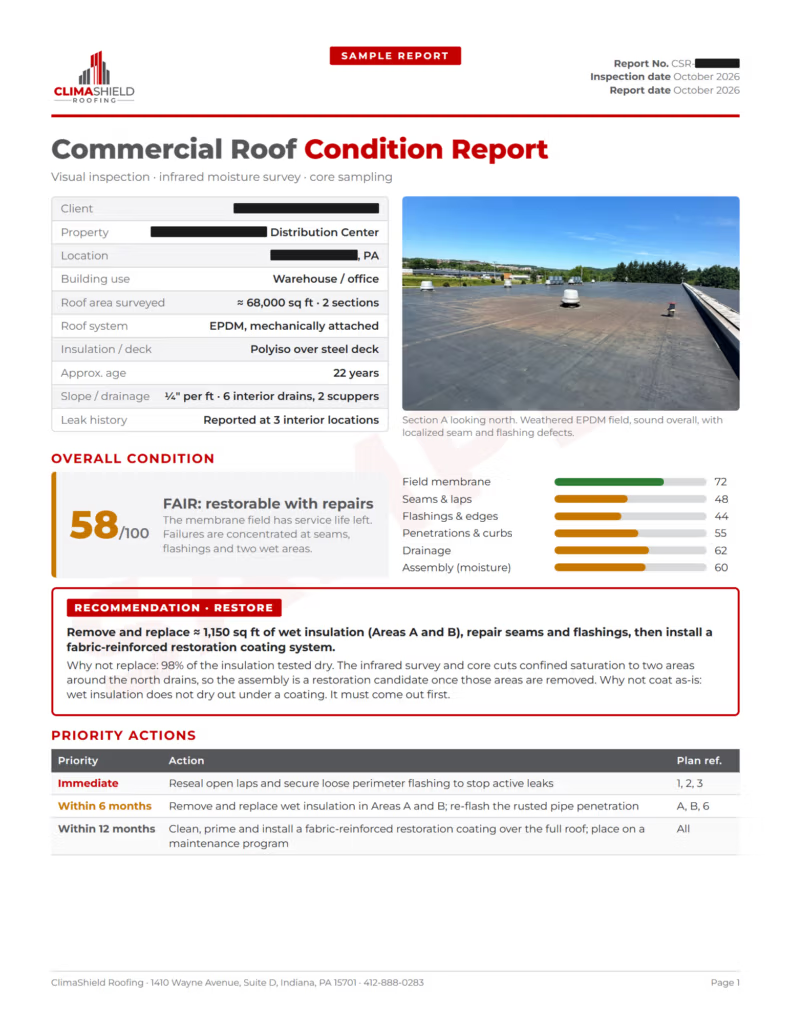
A commercial roof warranty is most commonly voided by a documentation gap, not a roof failure.
Every major commercial roofing manufacturer requires documented periodic inspections and maintenance to keep a system warranty in force. Missing that documentation can void coverage on a roof that is performing perfectly well. Other common causes are repairs made by an unauthorized contractor, non-approved materials or sealants, standing water and blocked drainage, new penetrations or rooftop equipment added without manufacturer approval, and damage that was not reported inside the required window.
Many owners cannot produce their inspection records. That is the gap.
The requirement almost nobody reads. Manufacturers require professional inspections on a set schedule for the warranty’s full duration, with written documentation. This is the most common gap and the one that surprises owners most.
Warranted systems generally require that repairs be performed by a contractor the manufacturer has approved for that system. A well-meaning handyman patch, or a repair by whoever was available the day it leaked, can end coverage on the entire roof — not just the patched area.
A tube of the wrong caulk is enough. Manufacturers specify what may contact their system, and materials outside that list are treated as an alteration.
Most warranties require that water drain within a defined period after rainfall. Clogged drains, blocked scuppers and debris-choked gutters are the owner’s maintenance responsibility. Ponding that results from neglected drainage is a routine exclusion.

New HVAC units, exhaust fans, satellite dishes, solar arrays, telecom equipment — anything that penetrates or loads the roof after installation typically requires manufacturer notification and an approved detail. Equipment installed by another trade, flashed by that trade, is one of the fastest ways to lose coverage without ever knowing it.

Warranties carry notification windows. Storm damage discovered in March and reported in July may fall outside the window even if the damage is legitimate and covered.
Every HVAC technician, every window washer, every cable installer walking your roof is a risk. Damage caused by others is generally excluded — and the manufacturer does not care who caused it, only that the roof was altered or damaged outside the terms.
Let us be specific about the first one, because it is the one that quietly disqualifies the most roofs.
Carlisle, one of the manufacturers we install, requires that annual inspection and maintenance be performed within 60 days prior to each anniversary of the installation completion date, for the full duration of the warranty.
Read that again. Not “sometime that year.” A 60-day window before a specific date, every year, for twenty years.
And this is not one manufacturer’s quirk. Carlisle, Johns Manville, Firestone/Elevate, Versico and Mule-Hide all publish some form of periodic-inspection requirement. Coating manufacturers do the same.
Two things follow from that:
A walk-around by a facilities manager does not satisfy the manufacturer’s requirements.
Your maintenance staff may know the building better than anyone. That is not the issue. The requirement is for a documented professional inspection, and an internal walk-through does not produce the record the manufacturer will ask for.
Your warranty claim is only as strong as your paper trail.
When a claim is filed, the manufacturer pulls the maintenance records. This is a normal, expected part of the process — not an adversarial one. But no records means no coverage.
Commercial roofs are usually covered by two separate instruments, and owners routinely confuse them.
| Manufacturer warranty | Contractor workmanship warranty | |
|---|---|---|
| Issued by | The manufacturer of the system | The company that installed it |
| Typically covers | Materials, and on some systems the installed assembly | Installation and labor defects |
| Typical duration | Long-term | Shorter-term |
| Requires documented inspections | Yes | Varies |
| Survives if the installer goes out of business | Yes | Usually not |
That last row matters more than it looks. If the contractor who installed your roof is no longer in business — a common situation on a roof that is eight or twelve years old — the workmanship coverage is likely gone, and the manufacturer warranty is the only protection left standing.
Which makes keeping it compliant the whole game.
Answer these about the roof on your building right now.
If you cannot answer all five with confidence, your coverage has a gap. That is not unusual, and it is fixable going forward.
Warranty administration is built into every ClimaShield maintenance agreement. Not sold as an add-on — included, because a warranty nobody is tracking is a warranty nobody can use.
We track your anniversary date. We record the installation completion date for each roof we maintain and schedule the compliance inspection inside the manufacturer’s required window — for Carlisle systems, inside that 60-day pre-anniversary gate. You do not have to remember it.
We document to the standard the manufacturer will ask for. Every visit produces a dated written report with photographs, condition notes, and the specific work performed. That is the file that answers a claim.
We inspect the envelope, not just the field of the roof. Roofs rarely fail in the middle. They fail at the transitions — roof-to-wall, parapets, terminations, penetrations, curbs. Our inspection covers those, because that is where the money is.
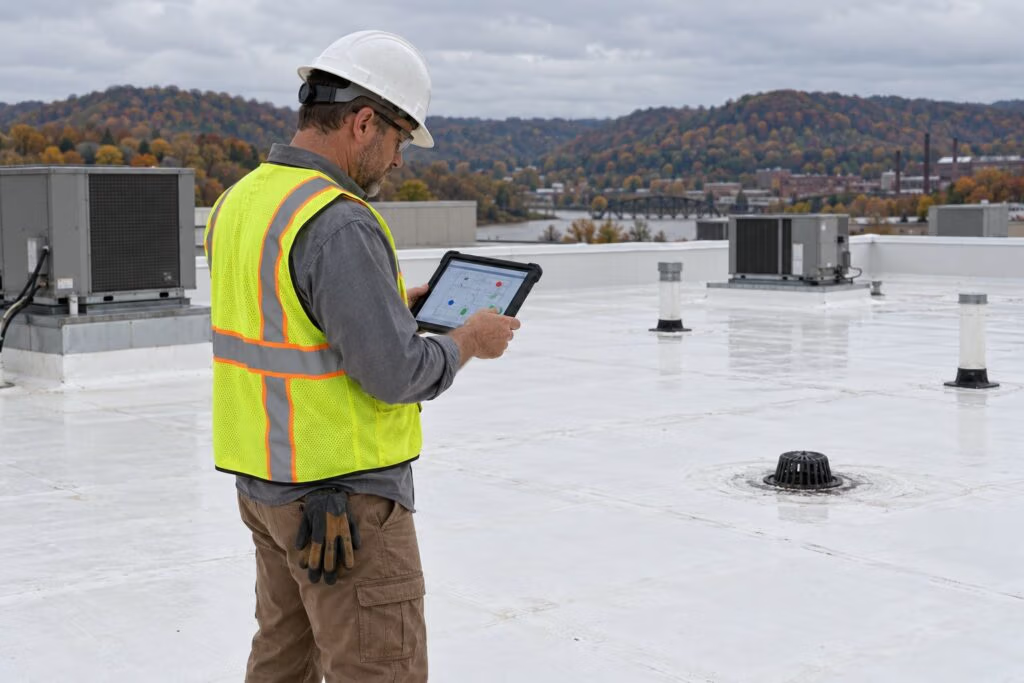
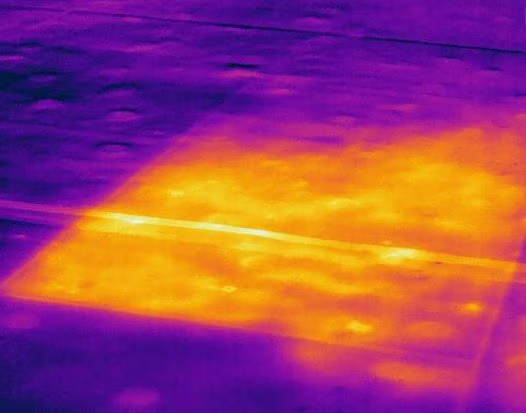
We use infrared when moisture is suspected. An infrared survey shows trapped saturation inside the assembly that a visual walk cannot see. Evidence, not opinion — and it is what tells you whether you are looking at a repair, a restoration, or a replacement.
We are a family-owned, SBA HubZone certified company in Indiana, Pennsylvania, founded in 2017, and we install and maintain systems from five manufacturers — Conklin, Carlisle, PPG/VersaFlex, Castagra and BASF. Our founders bring 17 years inside PPG — coatings chemistry, safety engineering, national sales management — and more than 35 years of general contracting. We read specifications for a living. Warranty terms are specifications.
The commercial and institutional buildings we maintain in the region include PennDOT District 10, the Cleveland Brothers Caterpillar facility, and the S&T Bank Arena — occupied, working buildings where losing coverage is not an abstraction.
→ Roof Maintenance Programs · Roof Inspections & Infrared Surveys
Be honest with yourself about this: a missed inspection from four years ago cannot be created retroactively. Anyone who tells you otherwise is telling you something you should not believe.
What you can do:
And if the coverage genuinely is gone, you are not out of options — you are in a different conversation, which is whether the roof should be restored rather than replaced. A restoration coating carries its own new manufacturer warranty on a roof you already own, typically for far less than a tear-off.
You do not have to be a ClimaShield customer, and we do not have to have put the roof on.
We inspect and maintain commercial low-slope roofs from any manufacturer, and we will tell you plainly what your warranty requires and whether you are meeting it — including when the answer is that the roof is in good shape and needs nothing but a record.
From our base in Indiana, Pennsylvania, we serve Western and Central Pennsylvania, plus Ohio, West Virginia and Maryland — including Pittsburgh, Johnstown, Altoona, State College, DuBois, Punxsutawney, Greensburg, Ebensburg and Somerset.
We will inspect your roof, document its condition, and tell you what your manufacturer’s warranty requires — and whether you are currently meeting it.
Almost certainly yes. Every major commercial roofing manufacturer requires documented periodic inspections and maintenance to keep a system warranty in force, for the full duration of the warranty. Carlisle, for example, requires annual inspection and maintenance within 60 days prior to each anniversary of the installation completion date. Check your own warranty document for the specific interval and window that applies to your system.
The most common cause is missing inspection and maintenance documentation. Other frequent causes are repairs performed by a contractor the manufacturer has not approved for that system, use of non-approved sealants or materials, standing water caused by blocked drains or scuppers, rooftop equipment or new penetrations added without manufacturer approval, and damage that was not reported within the required notification window.
No. Manufacturers require a documented professional inspection. A walk-around by a facilities manager does not satisfy the manufacturer’s requirements, however knowledgeable that person is. In-house staff are valuable between visits — for reporting problems early and keeping drains clear — but they cannot produce the record a manufacturer will ask for.
Your coverage likely has a gap, and a missed inspection cannot be created after the fact. Start the record now with a documented professional inspection, then contact the manufacturer to ask what they require to bring the system back into good standing — some have a defined reinstatement path. If coverage is not recoverable, a restoration coating can place a new manufacturer warranty on the existing roof, typically for far less than a tear-off replacement.
A commercial roofing contractor performs the inspection and issues the written report. On warranted systems it is generally best that the contractor be approved by the manufacturer for that system, since finding a defect usually means someone has to repair it — and an unauthorized repair creates a second problem.
Generally yes. The manufacturer warranty is issued by the manufacturer and survives the installer. The contractor’s separate workmanship warranty usually does not. That makes keeping the manufacturer warranty compliant more important, not less, when the original installer is gone.
Yes. We inspect and maintain commercial low-slope roofs regardless of who installed them or which manufacturer’s system is on the building.